


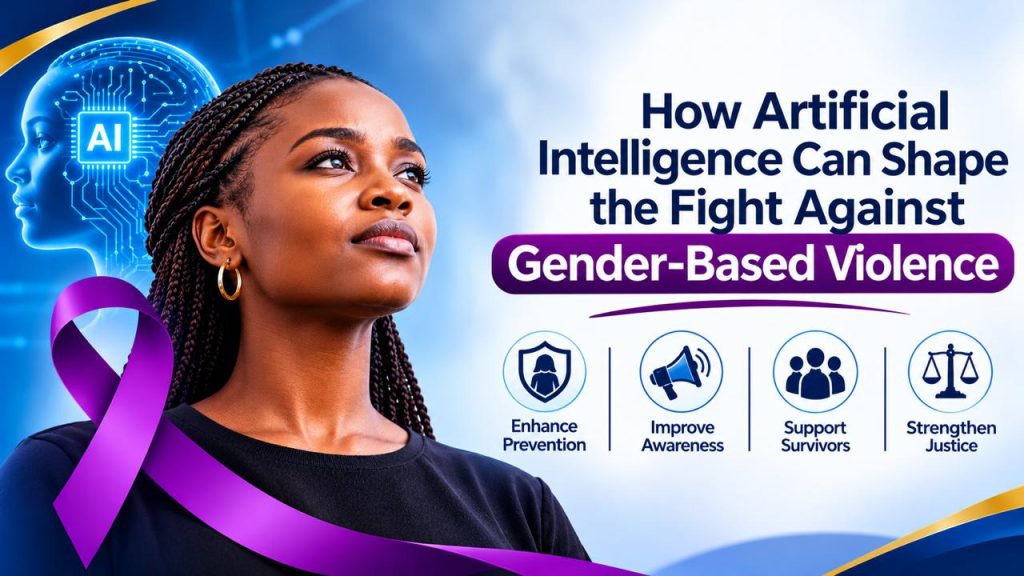
Gender-based violence (GBV) remains a major challenge affecting women and girls worldwide. As technology evolves, violence is no longer limited to physical spaces. Online harassment, cyberstalking, impersonation and AI-generated explicit images are creating new forms of abuse. But artificial intelligence (AI) can also be part of the solution.When used responsibly, AI can help detect threats, support survivors, improve reporting and strengthen efforts to prevent gender-based violence.
Here are five ways AI can make a difference.
1. Detecting and Preventing Online Abuse
AI-powered moderation tools can identify threatening messages, hate speech, cyberbullying and coordinated online harassment. By detecting harmful patterns earlier, digital platforms can respond faster and help prevent abuse from spreading.
2. Fighting Deepfakes and Digital Exploitation
AI-generated deepfakes are increasingly being misused to manipulate images, impersonate individuals and create non-consensual explicit content. AI detection tools can help identify manipulated images and videos, flag suspicious content and support faster investigations. However, technology must be combined with effective reporting and content-removal systems.
3. Making Survivor Support More Accessible
AI-powered chatbots and digital assistants can help survivors find information about reporting abuse, legal assistance and available support services. Language translation tools can also make these resources accessible to more women and girls, including those facing language barriers. These technologies should complement, not replace, trained professionals and confidential survivor support.
4. Using Data to Strengthen Prevention
AI can analyse anonymised data to identify patterns in reported abuse, emerging threats and gaps in support services. These insights can help governments, technology companies and organisations develop more targeted prevention programmes and make informed decisions. Privacy and survivor confidentiality must remain central to this process.
5. Expanding Digital Awareness and Education
AI can help create accessible educational materials, translate awareness campaigns and support digital literacy programmes. From recognising online harassment to understanding digital consent and personal privacy, these tools can equip women and girls with knowledge to navigate digital spaces more safely.
The Other Side of AI: A Growing Risk
While AI presents new opportunities, it can also make gender-based violence easier to carry out. Deepfakes, automated harassment, impersonation and gender-based disinformation demonstrate how technology can be weaponised against women. AI systems can also reproduce harmful gender stereotypes if they are developed without adequate safeguards. This makes responsible development, transparency and accountability essential.
What Needs to Happen Next?
The fight against gender-based violence requires more than technological innovation.
- Technology companies must strengthen platform safety and respond to AI-enabled abuse.
- Governments must develop and enforce laws addressing digital violence.
- AI developers must prioritise privacy, fairness and safety.
- Civil society organisations must invest in awareness, digital literacy and survivor support.
- Communities must challenge online abuse and promote responsible technology use.
Building a Safer Digital Future
Artificial intelligence will continue to reshape how people communicate, work and interact online. Its role in addressing gender-based violence must therefore become part of the wider conversation about digital safety and equality. AI cannot end gender-based violence on its own. But with responsible innovation, stronger policies and collective action, it can become a powerful tool for prevention, protection and accountability.
Join Miss.Africa in empowering women, amplifying voices, and shaping a future where every woman has the opportunity to thrive.
Subscribe to get latest blog updates!